Are We There Yet?

Let me start with Mark Mardell.
Mark is a former BBC journalist — World Affairs Editor, North America Editor. He has Parkinson’s disease. Last October, he arrived at Istanbul airport to catch a Turkish Airlines flight home to London. He’d checked in. He was at the gate. And then he was told he couldn’t board.
Turkish Airlines had a policy buried in their small print: Parkinson’s was the one condition — just Parkinson’s, not heart disease, not diabetes — requiring passengers to produce a doctor’s certificate before flying. To this day, nobody has offered a satisfactory explanation for why. Mark spent seven hours stranded at the airport, his son Jake beside him. He said he felt humiliated. Close to tears.
The CAA confirmed the policy was unlawful under UK law. Except Turkish Airlines is neither UK nor EU registered, so the CAA has no formal powers to act. The airline eventually removed the explicit mention of Parkinson’s from its website. The new wording requires “sick passengers” to provide a doctor’s report. Vaguer. Still discriminatory. Just harder to challenge.
I’ve interviewed Mark on my podcast, The Way We Roll. His story resonates — not just because it’s outrageous, but because it’s so familiar.
I have my own version. I was once on an EasyJet flight with a battery charger resting on my lap — too large for hand luggage. A cabin crew member spotted a label on it: “Don’t cover holes needed for ventilation.” He told me I couldn’t fly with it. We argued. He went to consult the pilot. While he was gone, I tore the label off. He came back, looked at the battery, and said: “Oh, that’s fine now.”
Same battery. Same holes. No label, no problem.
It’s funny. But it captures something true about how disabled people navigate transport. The barriers aren’t always about malice. Sometimes they’re about one person with a little authority and very little understanding. And the difference between getting home and spending seven hours in an airport can hinge on something completely arbitrary.
The National Centre for Accessible Transport has spent three years building the evidence base on all of this. Their verdict is unambiguous: UK transport strategies have “failed” disabled people. Ninety-two per cent of disabled people encounter barriers when using at least one mode of transport. Disabled people make 38% fewer journeys than non-disabled people. And 67% avoid spontaneous journeys altogether.
That last figure is the one that stays with me. Not the planned journey that goes wrong — but the simple freedom to decide on a whim to go somewhere. To meet a friend, see a show, take a chance. That freedom, which most people never think about, is simply not available to the majority of disabled people.
And the consequences reach well beyond inconvenience. Inaccessible transport is a direct barrier to employment. You cannot get to work if you cannot get there. That has always been true — but it matters more now. As more employers call people back to the office, the gap between disabled and non-disabled workers risks growing wider. Not because disabled people don’t want to work. Because the infrastructure that would get them there doesn’t reliably exist.
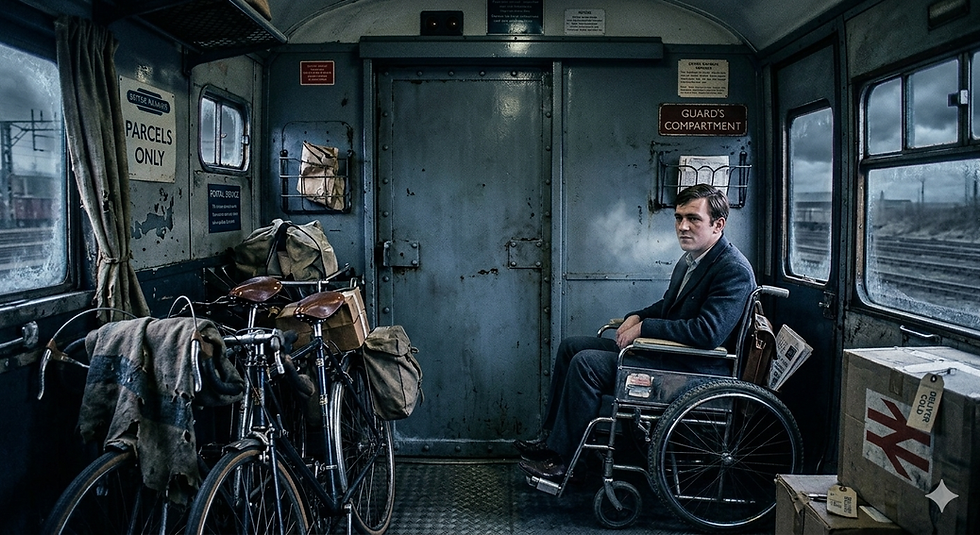
I used to travel in the guards' van on trains — in with the luggage, because there was nowhere else for a wheelchair user to go. The Disability Discrimination Act 1995 eventually changed that. New legislation, new rolling stock, and the guards' van became history. Buses improved. Taxis too. These things changed because they had to.
Progress is possible. But it doesn’t happen through goodwill. It happens through rules, with real enforcement behind them.
The Transport Committee’s Access Denied report, published last year, laid out exactly why that enforcement is currently failing. The legal framework is fragmented. Regulators lack the powers to intervene. And the burden falls almost entirely on individual disabled people, who must pursue their own cases at their own expense. Most don’t. Which is why most operators have little reason to change.
The government accepted the findings. Their response was to refer the whole legal landscape to the Law Commission for a three-year review. Consultation begins in autumn 2027. Report due February 2029. Legislation after that.
Millions of people are affected. And the answer is: wait a decade.
Mark Mardell’s story shouldn’t have happened. It happened because nothing stopped it. I tore a label off a battery and was allowed to fly. The problem and the fix were both completely arbitrary.
Disabled people have been asking the same question from the back seat for a very long time now.
Are we there yet? Not even close.


Comments